
Most people don’t fail at habits because they’re lazy. They fail because the first few days feel pointless. You make a plan, you do the thing twice, and nothing changes. No visible results. No dramatic mood shift. Just the awkward feeling that you’re spending effort for a future version of yourself you don’t fully believe in yet.
Starting a habit journey means stepping into a gap between intention and evidence. You want to become someone who trains, reads, sleeps better, drinks less, builds something, learns a language — whatever it is. But you don’t get to feel like that person right away. In the beginning you’re just you, doing a small action that looks insignificant. And that’s exactly why most habit systems collapse: you expect motivation to carry you through a phase where the only thing available is consistency.
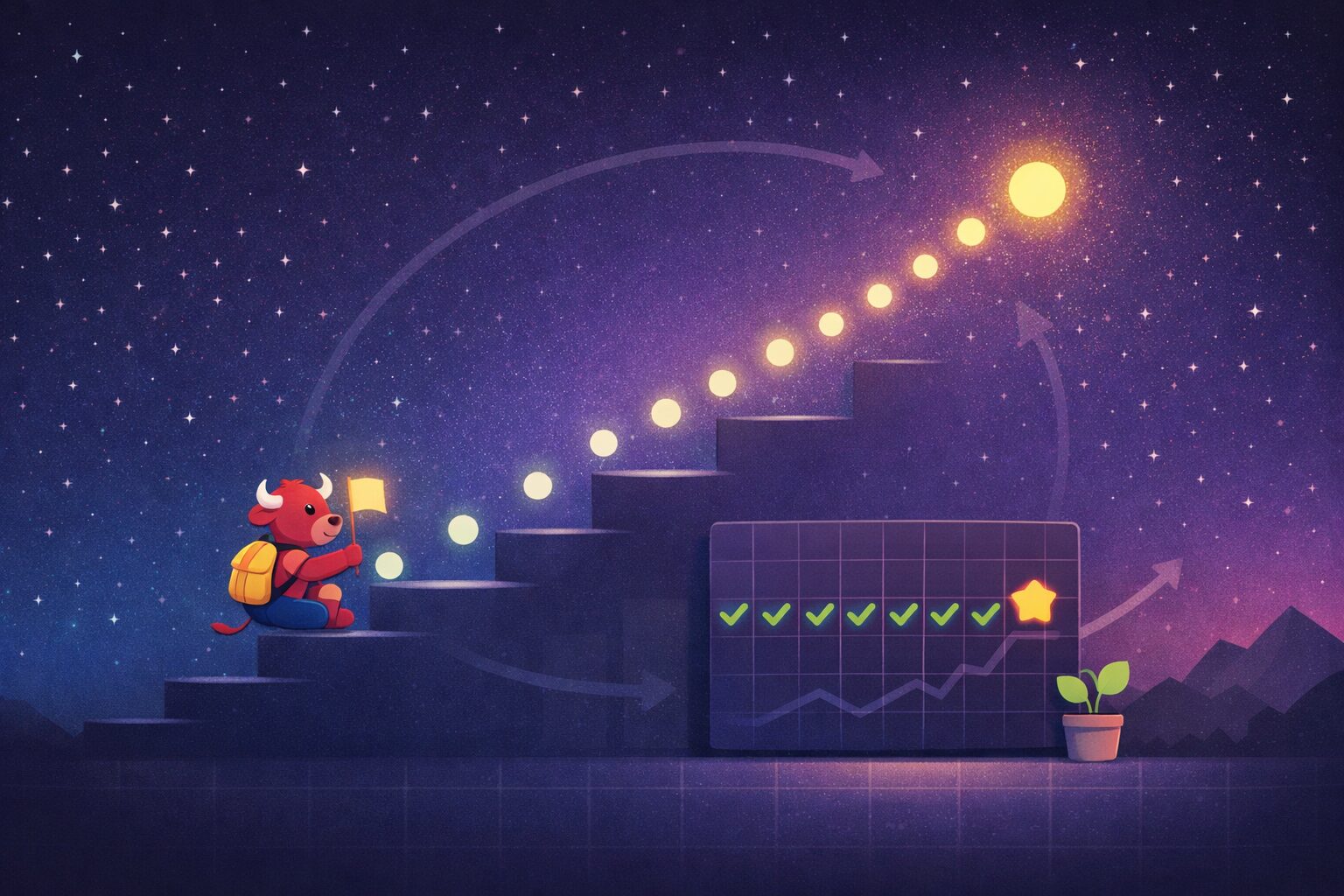
The logic behind compounding and identity-based habits is simple: small actions are not small if they repeat. One workout doesn’t matter much. Ten workouts matter. A hundred workouts changes what your body expects from you. The same is true for writing, learning, saving money, meditation, stretching, or eating differently. The effect isn’t linear. It’s delayed, and then suddenly it’s obvious. People call it discipline, but a lot of it is just staying long enough for the math to finally show up.
What’s rarely said out loud is that the early phase can feel almost insulting. You do the right thing and your life doesn’t immediately reward you. In fact it may feel worse at first. You’re tired, you’re more aware of your own inconsistency, and you’re saying no to comforts you relied on. This is where the brain tries to protect you with a very convincing argument: this isn’t working, stop.
So if you want to start habits in a way that lasts, the goal in the beginning isn’t improvement. It’s proof. Proof that you can show up even when it’s boring. Proof that your “future self” is not a fantasy. Proof that you can keep a promise that no one else is watching.
A lot of people aim too high because they’re trying to buy certainty with intensity. “If I go all-in, it will finally stick.” Sometimes it works, but most of the time it just creates a standard you can’t maintain. Then you miss a day, and the habit doesn’t feel like a habit anymore — it feels like a broken identity. The drop-off isn’t because you missed once. It’s because your plan was built on a version of you that only exists on a perfect week.
A more realistic approach is to make the habit small enough to survive your worst days. Not because small is magical, but because it’s sustainable. There’s a big difference between “I’m the kind of person who works out for an hour” and “I’m the kind of person who doesn’t skip movement entirely.” One of those collapses the moment your schedule gets ugly. The other survives. And survival is what creates momentum.
This is also where people misunderstand willpower. Willpower is expensive. It burns down fast, especially when you’re stressed. The point of habits isn’t to become a person with infinite willpower; it’s to build defaults. Defaults are what happen when you don’t negotiate with yourself every time. You brush your teeth without a motivational speech. That’s the level you want: automatic enough that it feels strange not to do it.
To get there, you need two things early on: a trigger you can trust, and a target you can hit. A trigger is the moment you attach the habit to: after coffee, after you close your laptop, when you get home, after you shower. A target is the specific, measurable version of the habit: ten minutes of reading, one page of journaling, five push-ups, one glass of water, one minute of meditation. Not “be healthier.” Not “get fit.” Something you can do today, in the world you actually live in.
The second thing you’ll need is a plan for imperfect weeks. Because imperfect weeks aren’t the exception — they’re most of the calendar. Work gets chaotic. You sleep badly. You travel. You get sick. Your motivation drops for no reason. If your habit only works when you feel good, it isn’t a habit. It’s a hobby for your best mood.
A simple rule that helps is to decide what “minimum” means before you need it. Not as a loophole, but as a safety system. You’re not lowering the standard; you’re protecting the chain from the reality of being human. Minimum is what keeps the habit alive. And once it’s alive, increasing effort becomes easier because you’re building on something that already exists.
At some point, you’ll notice a different change than the one you originally wanted. The habit starts to affect how you see yourself. You stop thinking of it as a task you’re forcing, and start thinking of it as something you do because it matches your identity. That identity shift is quiet, but it’s the real turning point. It’s also why tracking matters more than people admit. Tracking isn’t about productivity points. It’s about evidence. Evidence changes self-image. Self-image changes behavior.
If you’re beginning this journey, don’t look for the day where motivation arrives and everything becomes easy. Look for the day you do it without drama. The day you don’t debate. The day you do the small version even though you don’t feel like it, and you move on with your life. That’s when the habit stops being a goal and becomes part of you.
And if you mess up — because you will — treat it like data, not a verdict. Habits are not a moral score. They’re a system under real-world conditions. Adjust the system. Make the next repetition easier to start. Remove friction. Reduce the size. Fix the trigger. Keep the chain alive.
The compound effect doesn’t care about perfection. It only cares about repetition. That’s both the frustrating part and the hopeful part. You don’t need a life overhaul. You need a small action you can repeat long enough that it stops feeling like effort and starts feeling like normal.
If you want a practical way to make this easier, keep your setup brutally simple: one habit, one trigger, one minimum, and a way to track it without thinking too much. That’s the idea behind Habitoro — not to “motivate” you, but to give you structure and a place to store proof. Start with one habit, one minimum, and one tracked rep.